A high alkaline detergent for use in washer disinfectors for the
removal of heavy surgical soils from medical devices. Suitable
for use on alkali resistant surfaces such as stainless steel,
ceramics, glass and resistant plastics.
- Home
- Cleaning Machine system
- BIO-THREE
BIO-THREE
BIO-THREE
BIO-THREE
- INSTRUTIONS OF USE
- AREAS OF APPLICATION
- FEATURES & BENEFTS
- COMPOSITION
- PRECAUTIONS OF USE
- PACKING TYPES
INSTRUTIONS OF USE
– Dosing range 3-8 ml/lt.
– Cleaning temperature normal.
– Ensure complete rinsing after use.
– Do not mix with other chemicals.
AREAS OF APPLICATION
For heavily soiled items such as gynecological and orthopedic
instruments.
Effective for removing blood, fat, grease and oil.
Effective on strongly binding contaminants including burnt
electrosurgical deposits.
Suitable for all types of washer disinfectors.
Prevents protein redeposition.
FEATURES & BENEFTS
- For heavily soiled items such as gynecological and orthopedic
instruments. - Effective for removing blood, fat, grease and oil.
- Effective on strongly binding contaminants including burnt
electrosurgical deposits. - Suitable for all types of washer disinfectors.
- Prevents protein redeposition.
COMPOSITION
Potassium hydroxide, Sequestering Agents, Surfactants
and Corrosion Inhibitors.
– Specific gravity (20°C): 1.3 (typical)
– pH as supplied (typical): 13.5
– pH at 5ml/lt in water (typical): 12.6
– Viscosity (concentrate, 20°C): < 50 cps
PRECAUTIONS OF USE
1. Critical Handling Warnings
-
ACIDIC CONCENTRATE (pH 2.2):
-
⚠️ Skin/Eye Contact: Causes severe burns.
→ PPE Required: Nitrile/butyl rubber gloves + splash goggles.
→ If exposed: Rinse affected area with water for 15+ minutes; seek medical help. -
⚠️ Inhalation Risk: Use in well-ventilated areas; avoid mist formation.
-
2. Storage & Compatibility
| Do | Don’t |
|---|---|
| ✔️ Store upright in original container | ❌ Never mix with alkaline cleaners (e.g., BIO-ONE) or other chemicals |
| ✔️ Keep at 5–45°C (avoid freezing/heat) | ❌ Avoid contact with strong oxidizers (e.g., bleach) → hazardous reactions |
| ✔️ Store in dry place away from acids | ❌ Never reuse empty containers |
3. Usage Protocols
-
Dilution: Strictly 3–8 ml per liter of water.
-
Rinsing: Ensure complete rinsing cycle in washer-disinfectors.
-
Post-Use: Rinse instruments with water after processing.
4. Spill & Disposal
-
Spills: Contain with inert absorbent (e.g., sand); rinse area thoroughly.
-
Disposal: Follow local regulations. Never pour concentrate into drains.
⚠️ Essential: Always consult the Material Safety Data Sheet (MSDS) for full safety details.
OPTIMAL USE CASE
Ideal for:
-
Final rinse cycle in washer-disinfectors
-
Instruments requiring spot-free drying (endoscopes, surgical tools, glassware)
-
Regions with hard water to prevent scaling
PACKING TYPES
-
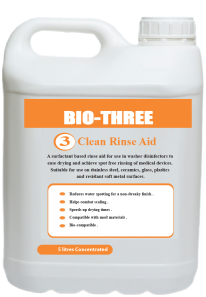
1 L : 10 bottels , 1000 ml
-
5 L : 2 gallons , 5000 ml